Korean / Source가
하나의 브랜드,
일관된 경험.
모든 웹사이트는 같은 디자인 규칙과 검토 절차에 따라 운영됩니다.
Source · v1Original Markdown
As Buzzvil prepared for a stock-market listing, its online presence needed to feel like one company. I connected its key websites through a shared brand system and an agent-driven way to keep them current.
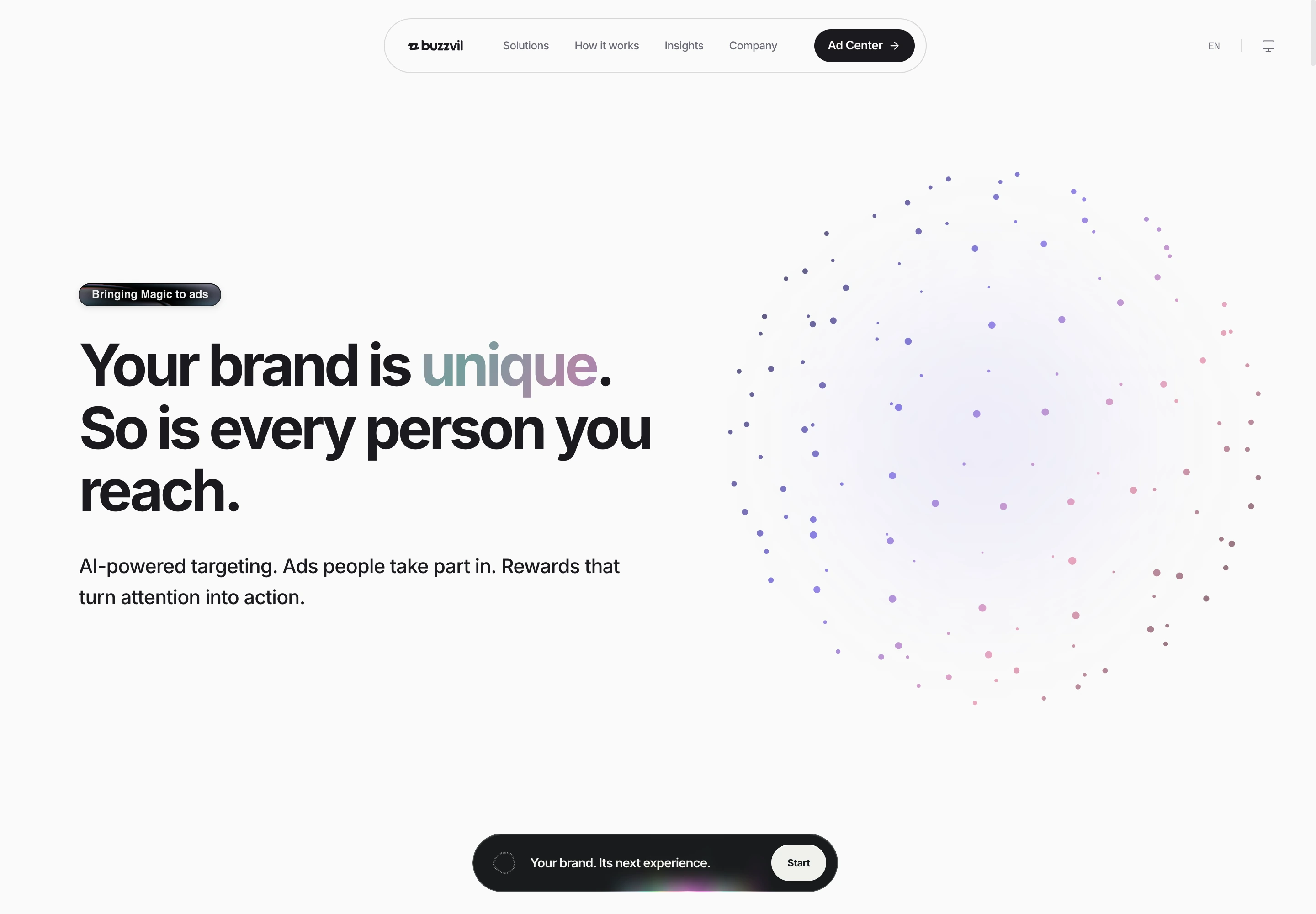
The new homepage, in its final content review.
Customers, developers and future colleagues met Buzzvil through different websites. I brought their typography, color, layout and interaction into a shared system, so each touchpoint could build the same sense of trust.
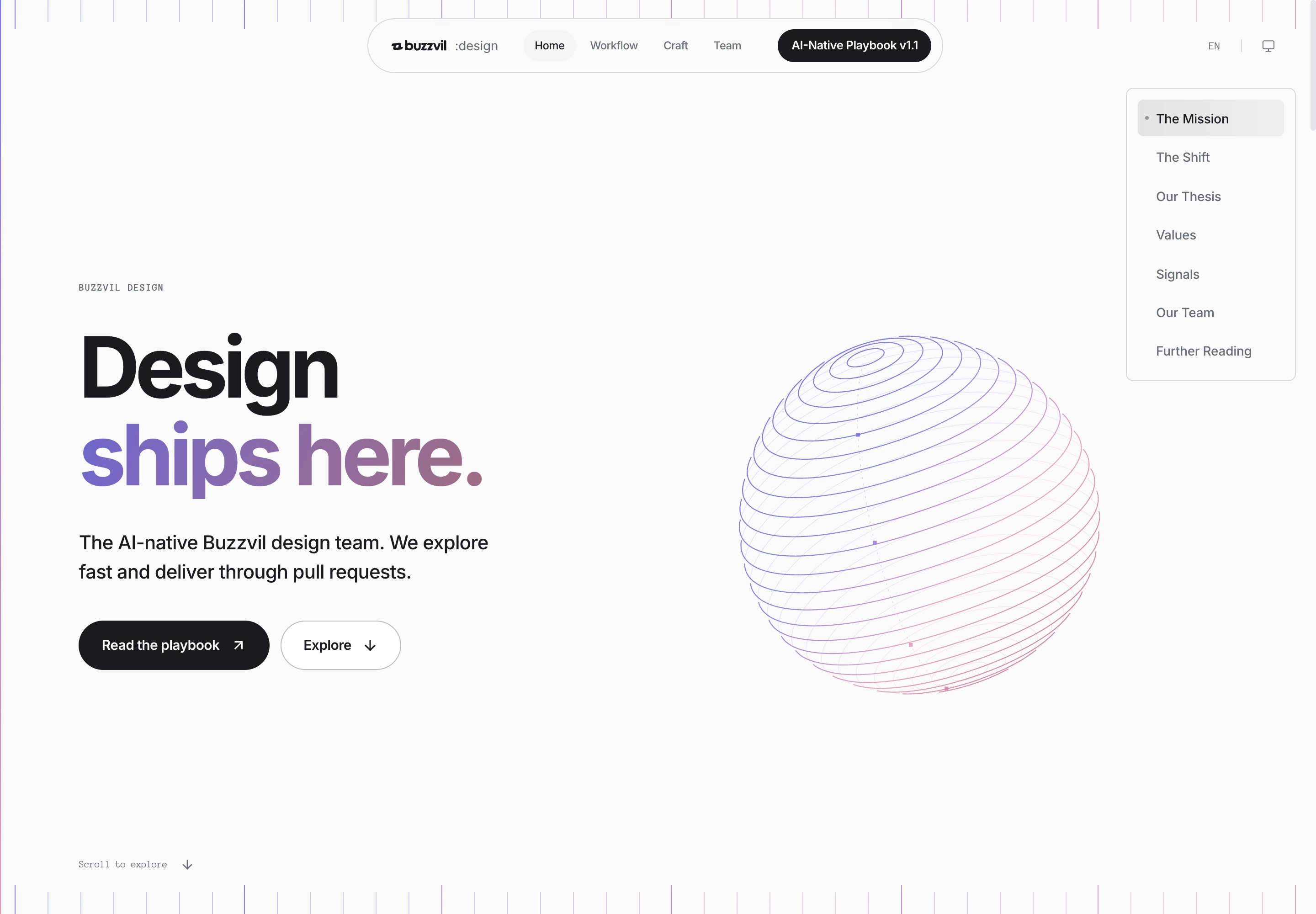
Designers update the site with AI assistants.
Visit Design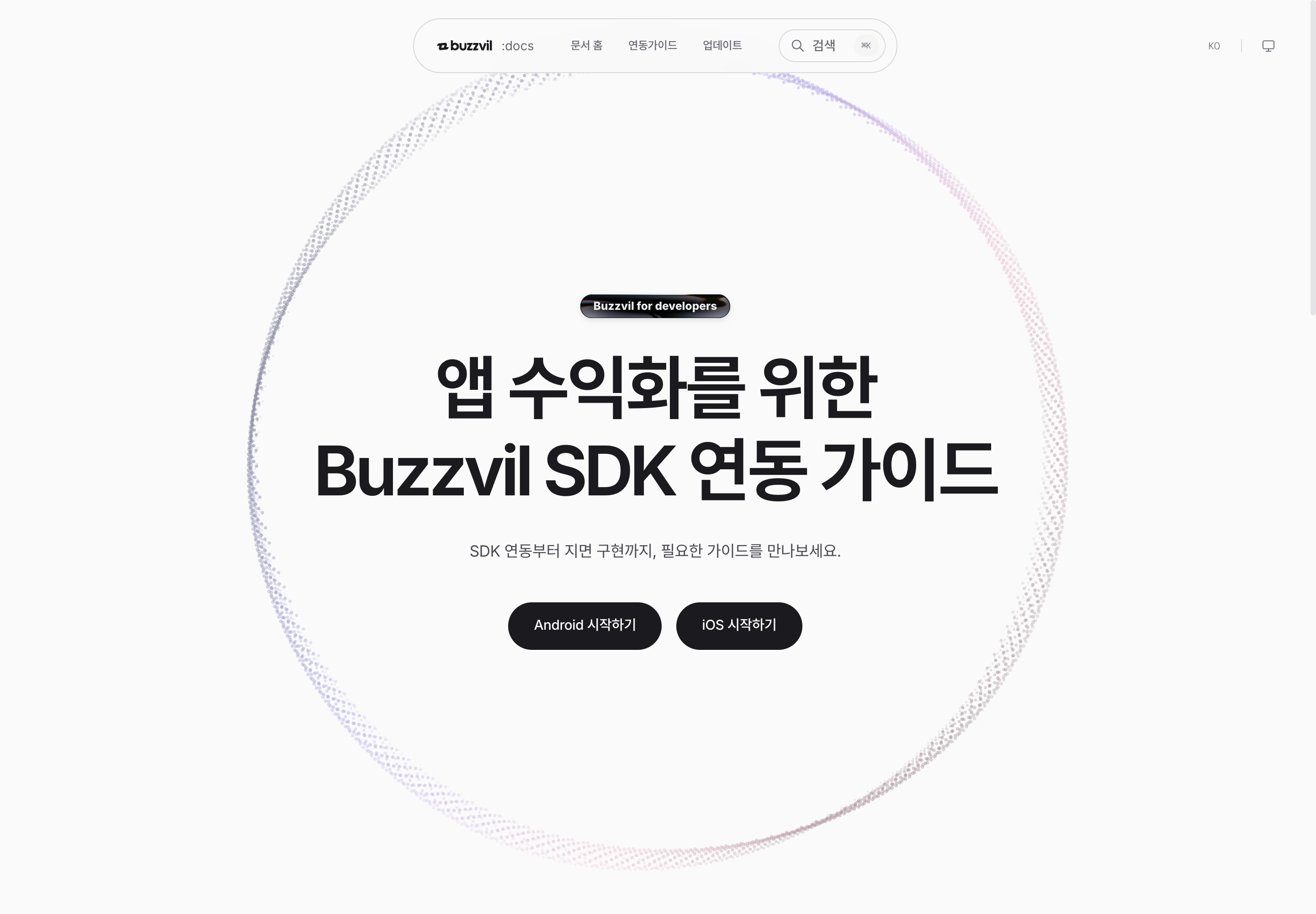
Technical writers update the documentation with AI assistants.
Visit Docs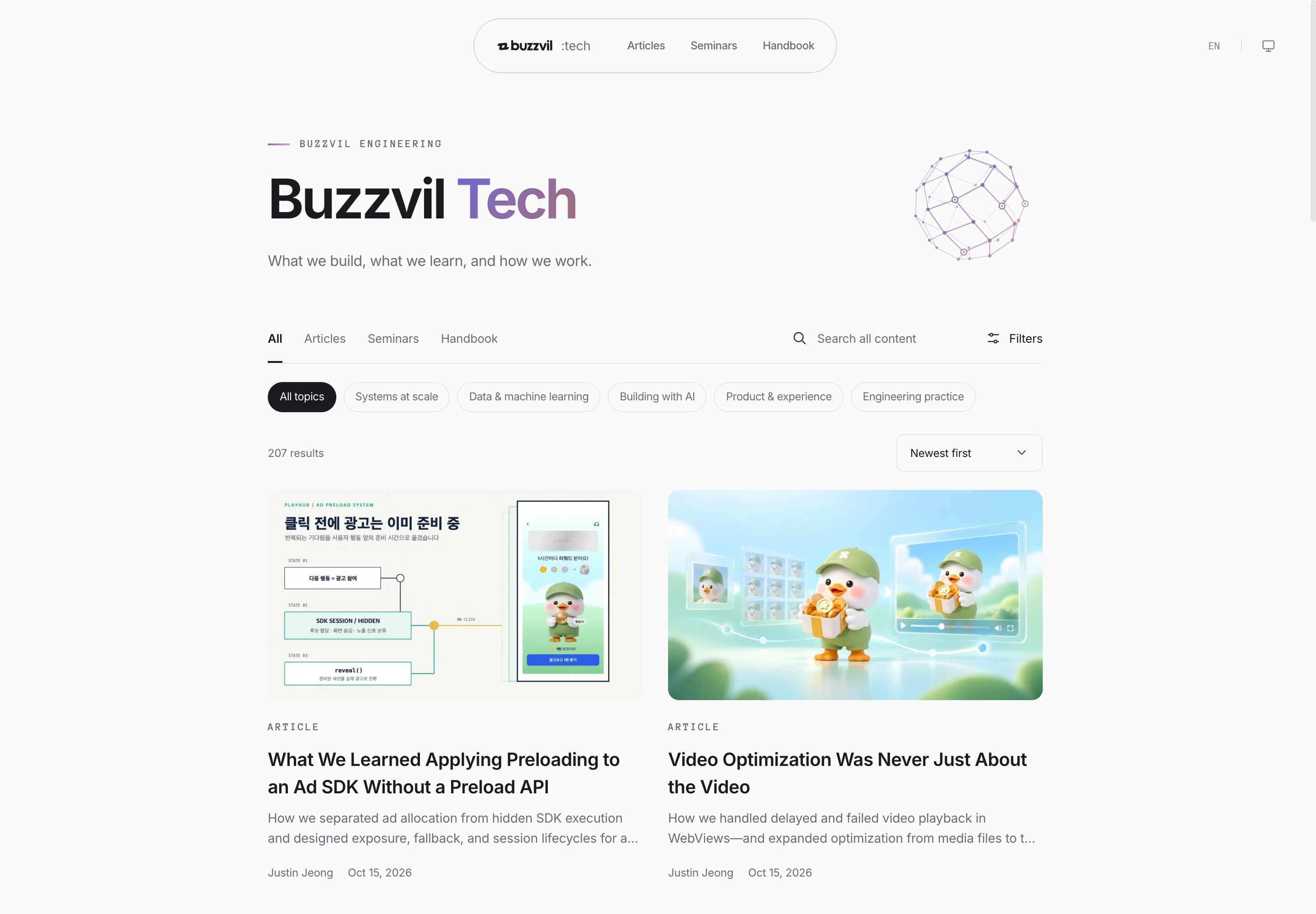
Anyone at Buzzvil who wants to post can contribute with AI assistants.
Visit Tech blogAI assistants prepare the changes. People review what gets published.
I built the repository around agent-driven contribution: app instructions, content conventions and shared UI. The interface for an update became a request and a preview, with people responsible for what ships.
The content owner supplies the intent and facts. The agent reads the app instructions, uses the shared components and prepares the edit in the repository. No CMS entry or manual page assembly.
Update the SDK release notes.
AGENTS.mdThe result becomes a pull request with a rendered preview. The owner can judge the page itself, with the file changes available when a closer look is needed.
Automated checks inspect the structure and affected code. People review what those checks cannot decide: accuracy, language and whether the page tells the right story.
An approved merge triggers the production deployment workflow. Content ownership and infrastructure ownership stay visible.
A colleague, Eden, tested the workflow with a real update to the developer release notes. To make previews accessible to contributors, I proposed a shared deployment path; Edward, an engineer, implemented it.
Opening updates to more contributors also made mistakes easier to repeat. The repository needed to enforce the rules, including keeping translations in sync.
The edition was prepared from the current source. People still review meaning and claims.
edition.sourceHash === sha256(sourceBytes)모든 웹사이트는 같은 디자인 규칙과 검토 절차에 따라 운영됩니다.
Every website follows the same design rules and review process.
The first redesign waited for JavaScript before showing its content. I moved reading back to server-rendered HTML, removed duplicate motion code and limited animation work to where it was needed.
legacy URLs checked
Still working after the migration
The migration also preserved how readers arrived: old links, search results and feeds. A faster, newer page still had to respect the reader who bookmarked the old one.
Uppercase filenames worked locally on my Mac but returned 404s on Linux. Normalizing the paths fixed the deployed pages. An RSS identifier change also made an old article appear new in Feedly. Those failures made redirects, filenames and feed identity part of the design work.
Consistency should leave room for expression. The corporate site explains Buzzvil through experiences people can try: discover an offer, participate and see the reward. Product demonstrations turn an unfamiliar B2B platform into something tangible.
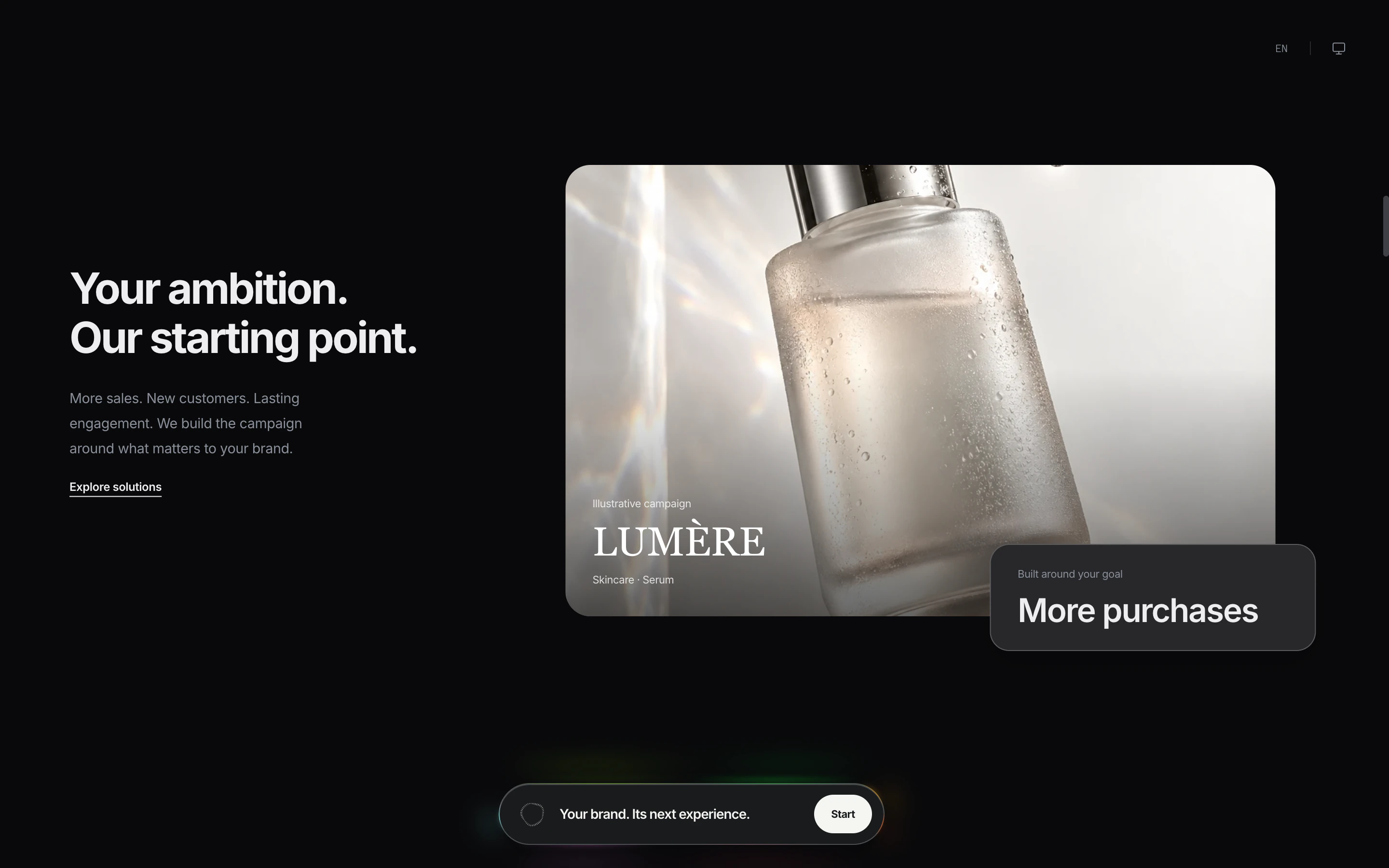
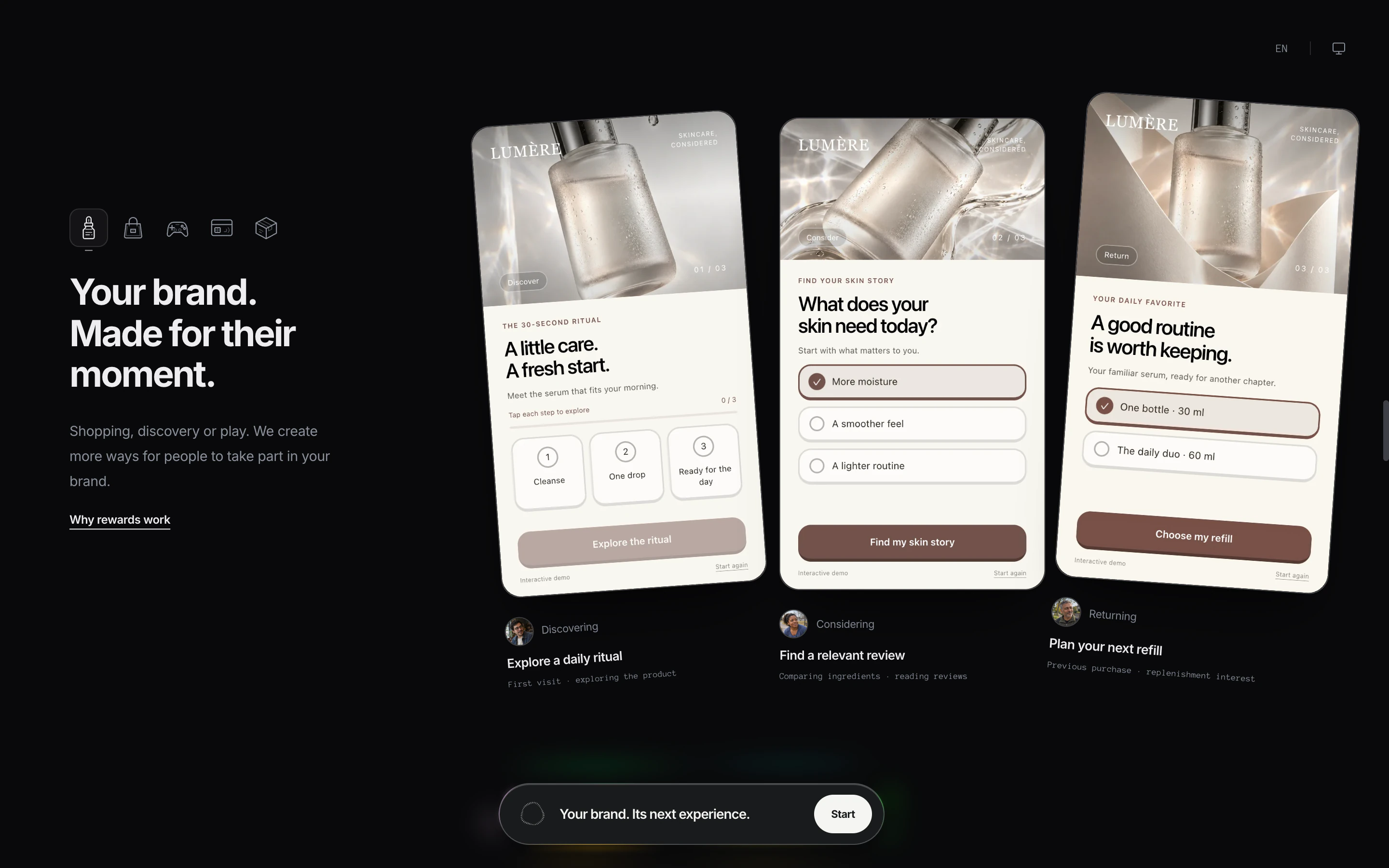
bilingual phone demos
reported October 16
Rich when opened. Light while browsing. The landing loads WebP previews first. A sandboxed demo loads when someone opens it, using a shared runtime across the experiences.
Interactive demonstrations of the advertising experience. The product work behind Game UA
Design, Docs and the tech blog are live, with their contributors already using AI assistants to keep them current. The homepage is in its final phase of content revisions, with launch expected late in 2026.
Most teams will be able to contribute through AI assistants. The homepage will use a more involved review process, giving teams a way to contribute while keeping the company’s public messaging consistent.
The redesign was only the first release. Shared components, agent instructions and publishing checks carry those decisions into the changes other people make.
Agents handle implementation, formatting and repeatable checks. People still own the facts, the message and the decision to publish. That is where the contribution process needs to be clearest.
A slow page, a stale translation or a broken bookmark changes how the company feels. The invisible parts of the system deserve the same design attention as the hero.