From install
to participation.
Introduce the game, make progress visible and give the player a next goal.
I helped turn rewarded advertising from a single paid action into a journey through a product. Game UA, our approach to bringing new players into games, was where I designed and helped prove that model.

A mission-page concept with sample game content.
In a cost-per-action campaign, or CPA, the advertiser pays when someone completes a defined action. The campaigns we wanted to move beyond centered on that single moment. But an install alone did not mean someone had discovered the game or found a reason to keep playing.
The campaign reached its goal. What happened inside the game remained the harder question.
Enter the game.
RewardReach a first milestone.
RewardProgress toward the next goal.
RewardWe connected rewards to steps inside the game. Players could see what to do next and what they would earn; advertisers could guide participation beyond the initial install. My early design work made that sequence understandable and helped establish that the model was worth developing.
We then separated this approach from the game-specific experience and carried it into brand and shopping experiences. The content could change; the underlying idea stayed the same: help someone discover a product through a sequence of clear, rewarded steps.
Introduce the game, make progress visible and give the player a next goal.
Give people an experience with the brand, beyond a view or a click.
Organize the experience around steps that bring someone closer to the advertiser’s goal.
These describe the design approach across experiences, not a claim that every journey led to a purchase.
Explore the later research into personalized brand experiencesA sequence can also create friction. Could people get into it easily? Did choosing their rewards help? Did they understand and trust their progress? The following studies examine those questions, across my early work and the team’s later experiments.
The explanation page repeated information already on the mission page. I proposed going straight to the experience, with a campaign switch to make the change reversible.
One more explanation before the player could begin.
People reaching the mission page
as a share of people clicking the ad
People installing the game
as a share of people clicking the ad
Easier entry left the harder question inside the experience.
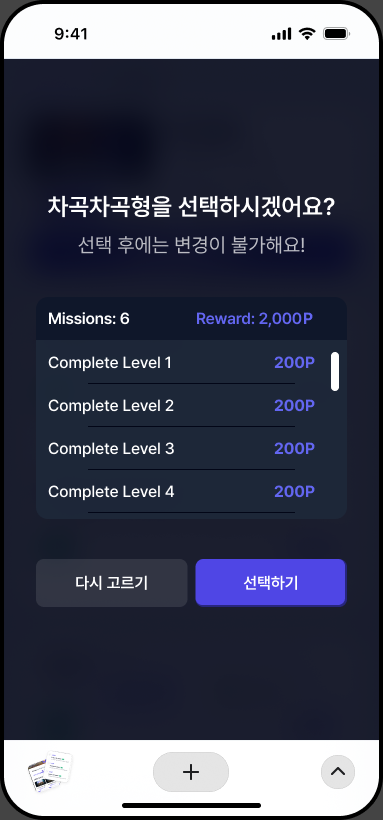
Getting people into the mission did not guarantee meaningful play. In a separate experiment, a feature called Mission Mode tested whether choosing a reward structure would build commitment. The first option dominated; few people explored the alternatives.

One Android campaign, 2025: target actions per install. Results are directional; test assignment is unconfirmed.
All three campaign/platform slices declined on this measure. Some purchase counts moved the other way. The result called for investigation, not a success claim.
The early feedback study exposed uncertainty about rewards. Later, the team tested a different part of engagement: giving people a nearby goal to pursue.
1,472 ratings
277 written comments
Themes from player feedback, 2024.
Share of daily visitors opening the game-rewards experience. Team comparison, 2026; rounded figures. Group sizes and test assignment remain unconfirmed.
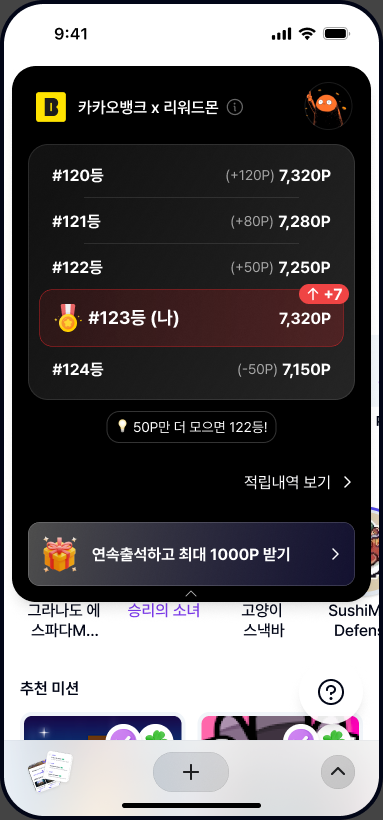
More people opened RewardMon. That finding does not establish longer sessions, repeat visits or revenue growth.
The early product work helped make the case for greater investment in 2025. By 2026, the strategy had to address a new constraint: how many more players the existing placements could reach.
2025 target ₩5B
Average monthly new users. The team saw the decline as a sign that existing partner placements were reaching their limit.
The 2026 strategy widened the journey beyond partner placements. These were directions to develop: the first-half review said external retargeting had not progressed as intended.
I handed ongoing design to Mido: mission hierarchy, progress and rewards, retention experiments and the standalone experience. My role moved toward guidance and review.

My focus shifted to Buzzvil’s AI-native organization and web readiness ahead of a planned stock-market listing. The next design problem was helping more people move from intent to implementation, with a clear way to review what ships.
Continue with Buzzvil mediumsRemoving an entry step helped more people reach the mission. Advertiser’s target actions stayed essentially flat in that comparison.
Mission Mode looked plausible, but all three campaign/platform slices recorded lower advertiser target actions per install.
My early design work helped establish the model. Mido took ownership of ongoing design as the product and its distribution strategy expanded.